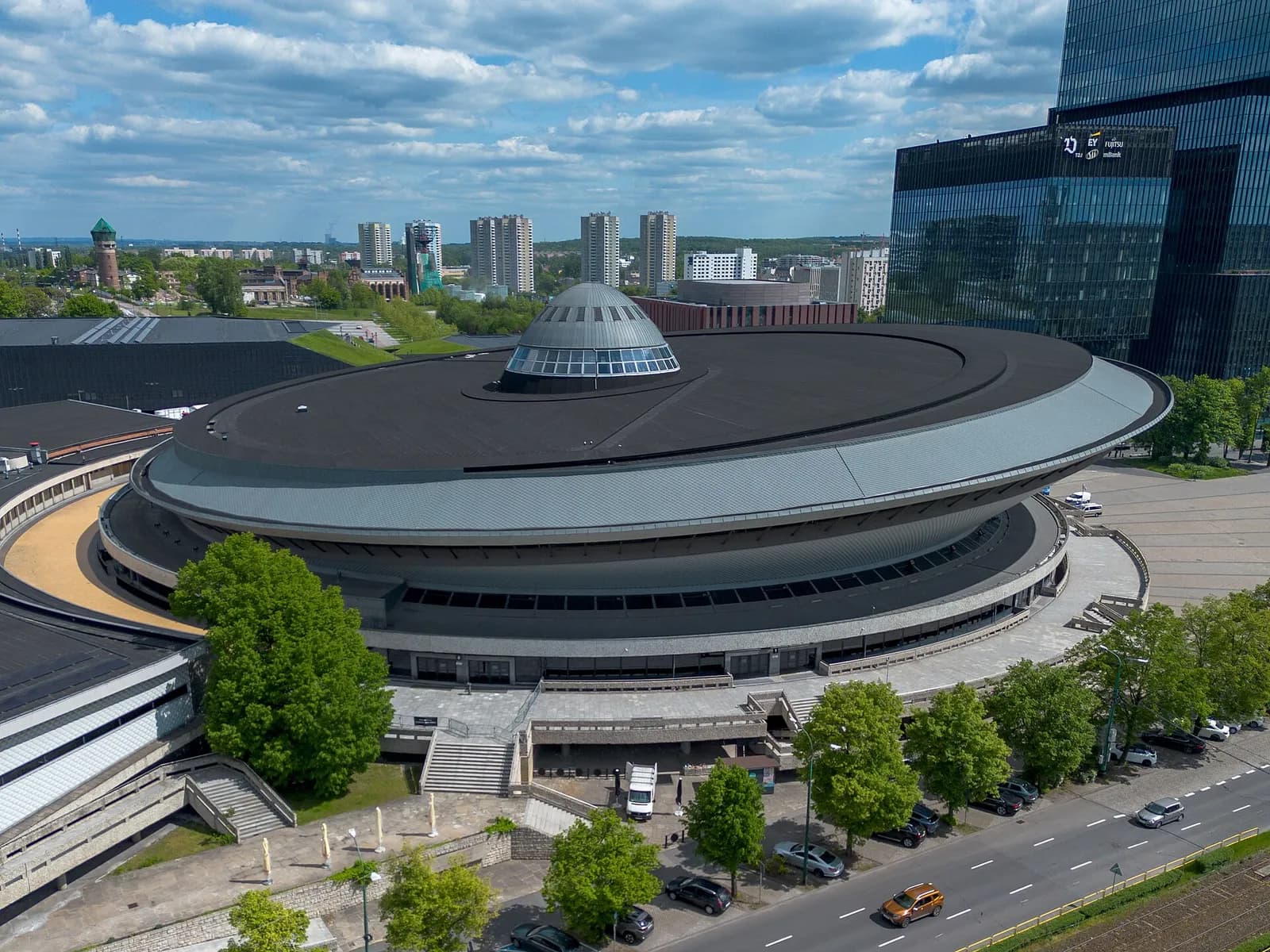
Long before Katowice became known for its thriving cultural scene, international business events and world-famous esports tournaments, there was one building that challenged expectations and captured imaginations.
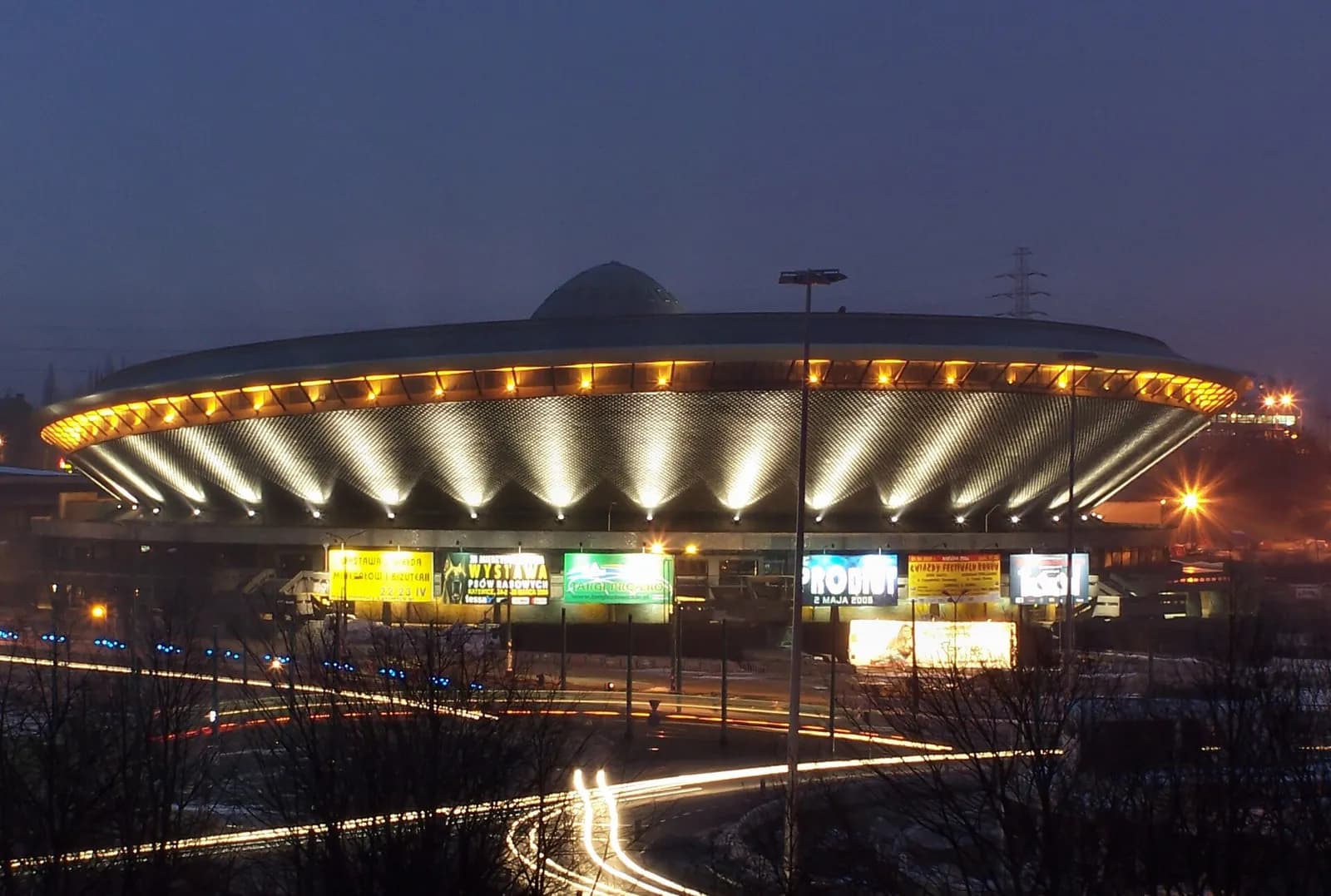
With its unmistakable flying saucer shape, Spodek has dominated the city's skyline since 1971. It is impossible to mistake, impossible to ignore and, for many people, impossible to separate from Katowice itself.
For more than fifty years, this remarkable arena has welcomed sporting legends, music icons, world leaders and millions of visitors. It has witnessed the city's transformation from an industrial powerhouse into one of Poland's most dynamic cultural destinations, all while remaining its most enduring symbol.
A Futuristic Vision for a Changing City
When plans for the arena first emerged in the late 1950s, the design looked unlike anything Poland had seen before. Rather than following the traditional style of sports halls of the era, architects Maciej Gintowt and Maciej Krasiński imagined a building that appeared to hover above the ground.
Originally intended for nearby Chorzów, the project was eventually moved to central Katowice, where civic leaders recognised its potential to become a landmark for the entire region.
Construction began in 1964, and the ambitious design prompted as much curiosity as excitement. Its enormous suspended roof, supported without internal columns, seemed almost impossible to many observers.
Rumours circulated that the structure might not withstand the removal of its temporary supports. Engineers, however, trusted their calculations completely. Local stories tell of them remaining inside the building during crucial stages of construction, while thousands of soldiers later marched across the arena floor to demonstrate its strength before the official opening.
When Spodek finally opened on 9 May 1971, it immediately became one of the most extraordinary buildings in the country.
More Than an Arena
From the very beginning, Spodek was designed to be a venue for far more than sport.
Its adaptable interior has hosted international conferences, exhibitions, television productions and some of the biggest concerts ever staged in Poland. Artists including Metallica, Elton John, Sting, Tina Turner, Iron Maiden, Rammstein, Genesis, Robbie Williams and Depeche Mode have all performed beneath its famous roof, while festivals such as Rawa Blues, Metalmania and Mayday have become fixtures in the city's cultural calendar.
Sport has remained equally central to its story. Volleyball World Championships, European championships and international competitions in athletics, wrestling, handball and ice hockey have all filled the arena with unforgettable moments, helping cement Katowice's reputation as one of Poland's great sporting cities.
A New Generation Discovers Spodek
While music lovers and sports fans have filled the arena for decades, Spodek has found a whole new audience in the digital age.
Since 2014, the Intel Extreme Masters tournament has turned Katowice into one of the world's most recognised destinations for competitive gaming. Every year, thousands of esports fans travel to the city, while millions more watch online as the distinctive silhouette of Spodek appears on screens around the globe.
The tournament has introduced the arena to a generation who may never have attended a rock concert or volleyball final there, proving that one of Poland's oldest modern arenas continues to evolve with the times.
At the Centre of Katowice's Transformation
Perhaps nowhere illustrates Katowice's changing identity more clearly than the area surrounding Spodek.
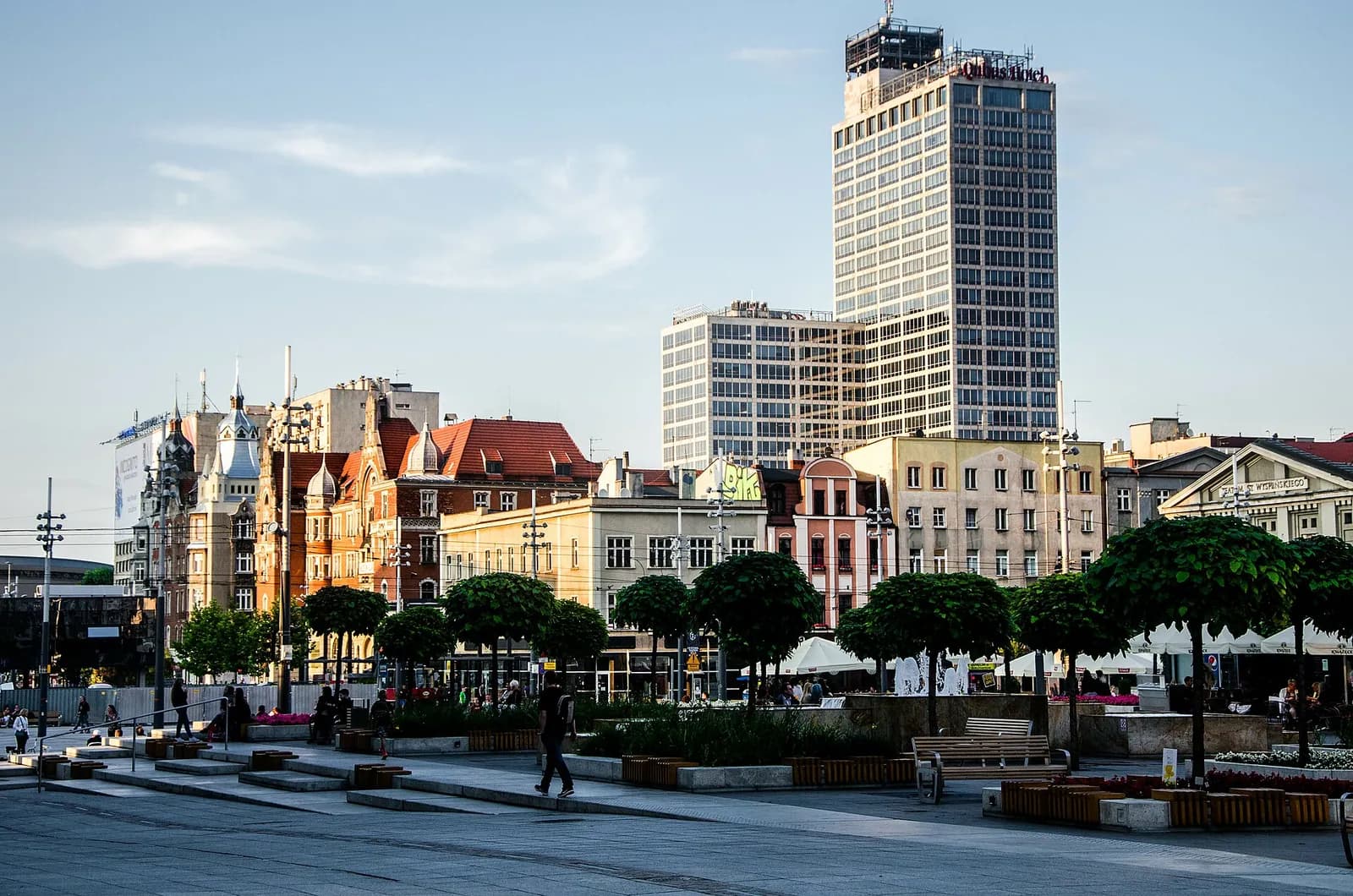
What was once an industrial landscape has become the city's vibrant Culture Zone, home to the award-winning Silesian Museum, the International Congress Centre and the Polish National Radio Symphony Orchestra (NOSPR).
Together, these institutions tell the story of a city that has embraced its industrial heritage while confidently looking towards the future. Standing proudly among them, Spodek provides a physical link between those two eras.
Preserving a Landmark
As the arena approached its fortieth anniversary, an extensive modernisation programme ensured it would continue serving future generations.
Completed in 2011, the project included replacing around 30,000 exterior panels, removing asbestos, upgrading technical systems and improving visitor facilities. Care was taken to preserve the arena's instantly recognisable appearance, allowing one of Poland's best-loved buildings to retain the character that has defined it for decades.
Still the City's Unmistakable Symbol
Many cities are known for a single building. In Katowice, that building is unquestionably Spodek.
Its bold architecture, remarkable engineering and decades of unforgettable events have secured its place as one of Poland's great post-war landmarks. Whether viewed from the nearby Culture Zone, arriving by train or illuminated against the evening sky, its distinctive silhouette remains the image that countless visitors associate with Katowice.
More than fifty years after opening its doors, Spodek continues to prove that truly great architecture never goes out of style.
Source: Spodek Katowice
image credit: Kapitel, CC BY-SA 4.0 / Lestat (Jan Mehlich), CC BY-SA 3.0