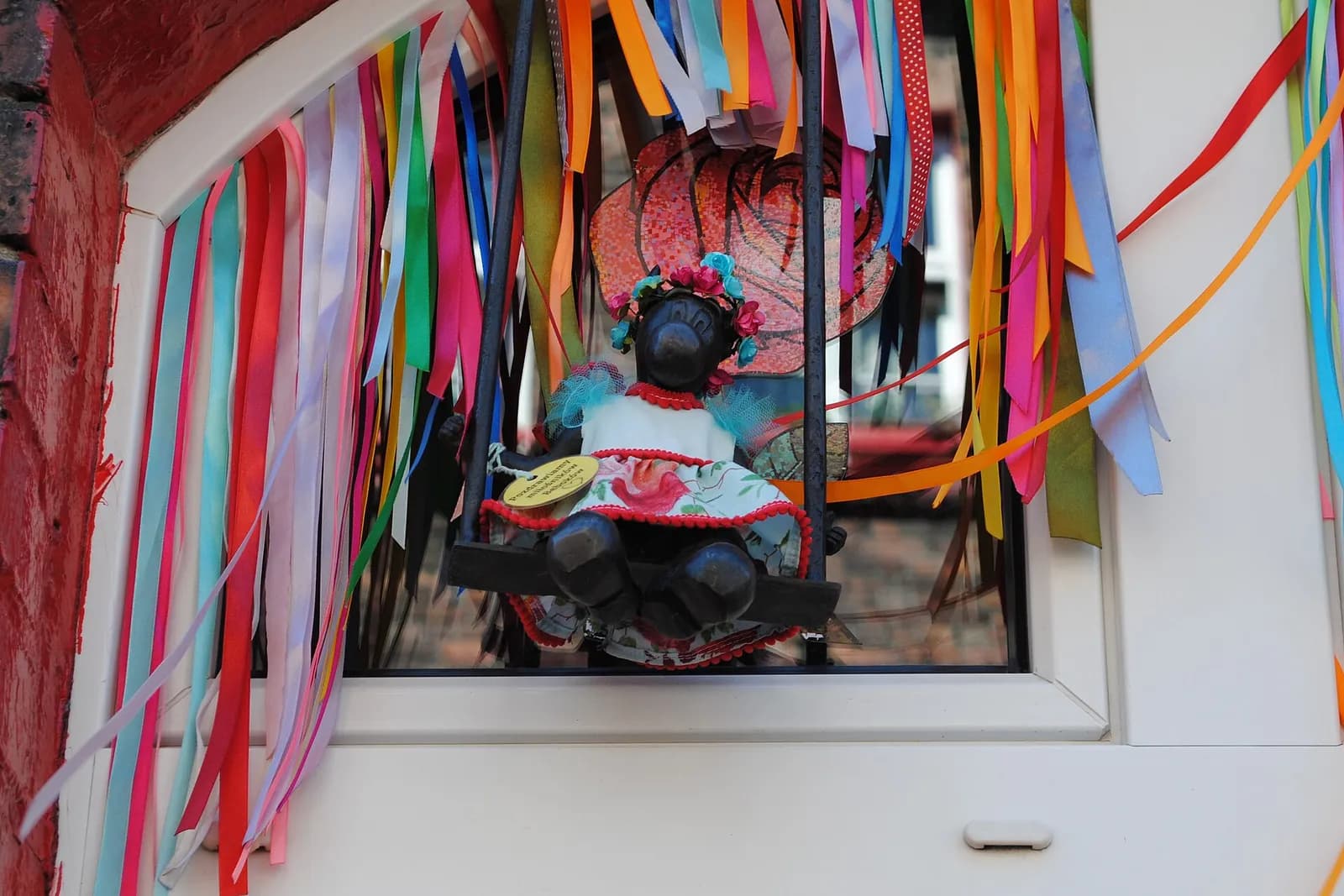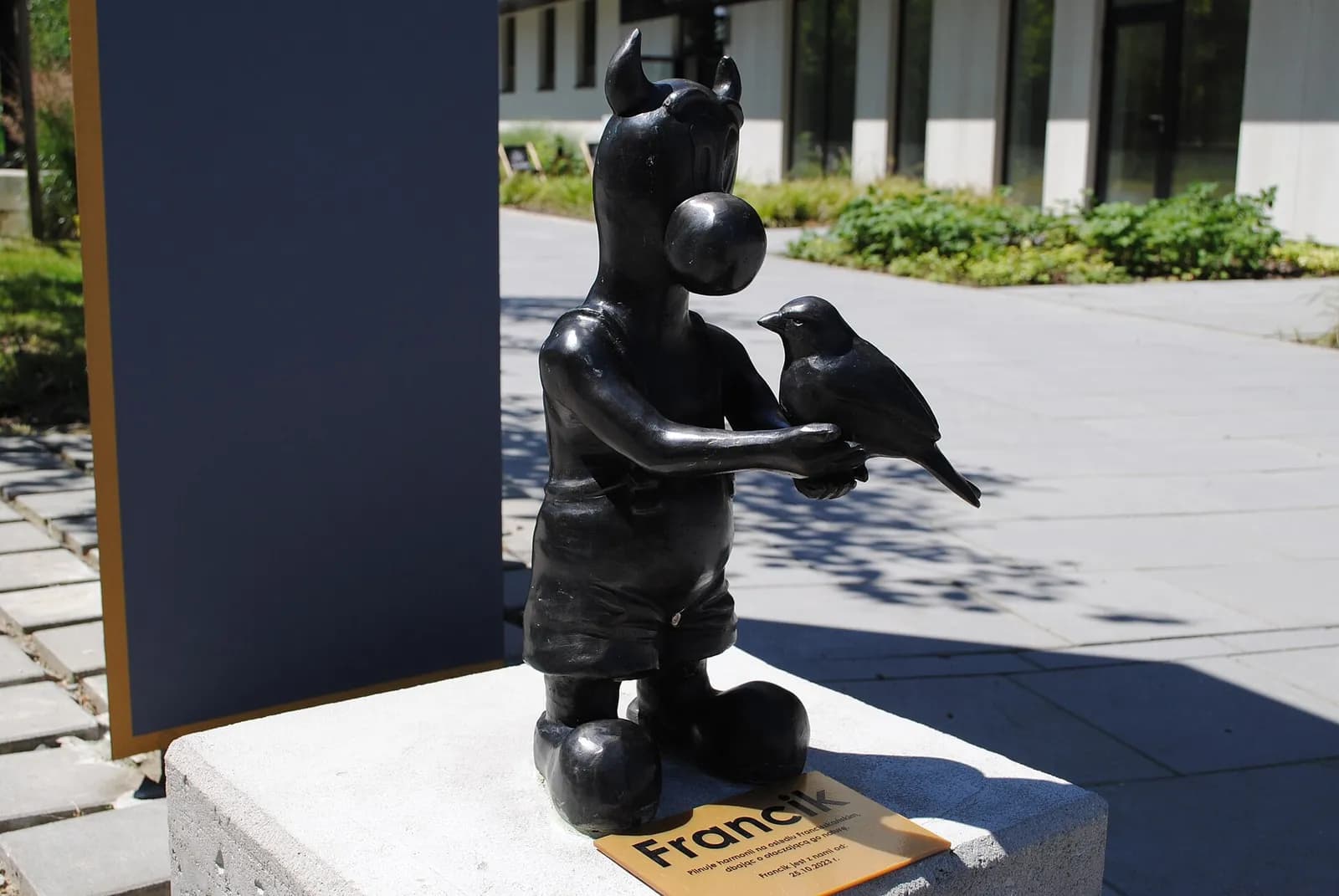
Small bronze figures are hiding in streets, squares and neighbourhoods across Katowice. Some are miners, others are firefighters, teachers, lawyers or railway workers. Each has a name, a character and a connection to the place where it stands.
Together, they form the Szlak Beboków, one of the most distinctive ways to explore Katowice.
The idea is simple. Keep your eyes open and look down as you walk. A tiny figure may be waiting outside a museum, beside a historic building, near a railway station or tucked away in a busy part of the city.
But there is a story behind these cheerful little creatures.
What is a Bebok?
The bebok comes from Silesian folklore. Traditionally, it was a creature used to frighten children into behaving themselves. The modern Katowice version is considerably friendlier.
Artist Grzegorz Chudy transformed the old folkloric character into the colourful, characterful figures now found around the city. Chudy, whose work is closely associated with Nikiszowiec, created the designs for the sculptures, giving each bebok its own appearance and personality.
The figures are small enough to miss if you are not looking for them, which is part of their appeal. They encourage a slower walk through the city, with the next discovery often hiding just around the corner.
The story began in Nikiszowiec
Nikiszowiec is the natural place to begin following the trail.
The historic workers' district is closely connected with Grzegorz Chudy and was also where the first permanent beboks of the modern trail appeared in 2021.
Wincynt and Michalino were among the first. Their arrival helped establish the idea of using the figures to connect contemporary art with Katowice's history and neighbourhoods.
Nikiszowiec makes a particularly good starting point because there is plenty to see between the sculptures. The red-brick familoks, Church of St Anne, local cafés and the Muzeum Historii Katowic provide the setting, while the beboks add a playful modern layer to one of the city's best-known historic districts.
At the museum's Department of Urban Ethnology, Sztefa and Erwinek are among the figures connected with the district and its history.
The museum has also explored the bebok phenomenon through exhibitions and photography, reflecting how quickly these characters have become part of the visual identity of Katowice.
Every Bebok has a story
The most enjoyable part of the trail is discovering why a particular figure is standing in a particular place.
A bebok outside a former industrial site may be dressed as a miner. Another might carry the equipment of a firefighter. One connected with a cultural institution can have a distinctly artistic character, while figures placed near schools, businesses and public institutions often reflect what happens inside the building behind them.
Ferdynand, for example, refers to the history of the former Ferdynand mine. Kuklok appears as a firefighter in Dąbrówka Mała.
The figures are not simply scattered randomly around Katowice. Their names, clothes and accessories often provide clues about the surrounding neighbourhood.
That makes the trail a useful excuse to look more closely at places that might otherwise be passed without a second thought.
From folklore to modern Katowice
The beboks also bring together two sides of the city.
There is the Silesian heritage of mining, industry, local traditions and dialect, alongside the contemporary Katowice of universities, culture, business, design and tourism.
A tiny miner can stand a few streets away from a modern office building. A figure inspired by a local profession can become a meeting point for families. Silesian words and names appear alongside locations that are increasingly familiar to visitors from outside the region.
The result feels particularly appropriate for Katowice, where the past and present are often visible on the same street.
A city-wide treasure hunt
The Szlak Beboków is not a single walking route with one starting point and finish.
The figures are spread across Katowice, from the centre to individual districts. That means the trail can be approached in different ways.
A first afternoon might concentrate on the city centre. Another outing could focus on Nikiszowiec and Giszowiec. Someone with more time can use the beboks as a reason to explore neighbourhoods further from the usual tourist route.
This makes the trail particularly easy to fit around a day in the city.
You might spot one while heading to a café, find another on the way to a museum, or suddenly notice a small bronze character while waiting to cross a street.
Collecting Bebok stamps
There is also a traditional treasure-hunt element.
Many of the bebok locations have their own stamps, which can be collected in the official booklet. The PTTK Łowca Beboków system turns finding the sculptures into a collecting challenge, with badges available to people who gather the required stamps.
It is a simple idea, but one that works particularly well for families. Instead of simply walking through Katowice, children have something specific to look for, while adults can follow the stories behind the locations.
The stamp book also gives the trail a reason to be revisited. There is always another bebok to find.
Beboks beyond tourism
The characters have gradually found their way into Katowice's cultural and educational life.
The Pedagogical Library of the Silesian Voivodeship in Katowice, for example, has used beboks in educational activities introducing children to Silesian mythology, Katowice's districts and the idea of exploring the city through a game.
This fits naturally with the concept. A bebok can introduce a child to a local word, a historic building, a former mine or an unfamiliar district without turning the experience into a traditional history lesson.
The figures have also become part of the way local organisations present themselves, with new characters commissioned to reflect particular institutions and their surroundings.
A different way to see Katowice
The best thing about the beboks is that they do not require a special itinerary.
You can simply walk.
Start in Nikiszowiec, wander through the centre, explore a district you have never visited or keep an eye out while travelling between two better-known attractions. The figures reward curiosity rather than speed.
And once you start spotting them, it becomes difficult not to look for the next one.
The Szlak Beboków has taken an old Silesian folk character and given it a new place in everyday Katowice. Today, these little bronze figures sit among the city's historic districts, modern streets and cultural institutions, quietly inviting people to stop, look around and discover what is nearby.
See more: The Story of Legendia, Poland’s Oldest Amusement Park Just Beyond Katowice
Source: Wikipedia
Image credit: Marek Mróz, Wikimedia Commons, CC BY 4.0